The digital business landscape is undergoing a major transformation. In previous years, businesses focused primarily on increasing visibility through websites, advertisements, social media, and online directories. While visibility remains important, the focus has shifted toward something even more valuable: trust.
As businesses and consumers become more cautious about whom they engage with online, verified business ecosystems are emerging as the foundation of the modern digital economy. Buyers are no longer satisfied with simply finding a company online. They want proof of legitimacy, verified credentials, authentic reviews, industry certifications, and transparent business information before making purchasing decisions. This shift is being accelerated by artificial intelligence, search engine evolution, and growing concerns about fraud, misinformation, and unreliable service providers. Search platforms, AI-powered assistants, and business marketplaces increasingly prioritize trusted and verified information when recommending companies to users.
In 2026 and beyond, businesses that establish credibility through verified ecosystems will gain a significant competitive advantage. Those that fail to build trust may struggle to attract customers, generate leads, and maintain sustainable growth. This article explores why verified business ecosystems are growing rapidly, how they work, their benefits, challenges, future trends, and why they are becoming essential for businesses of all sizes.
Quick Answer: What Are Verified Business Ecosystems?
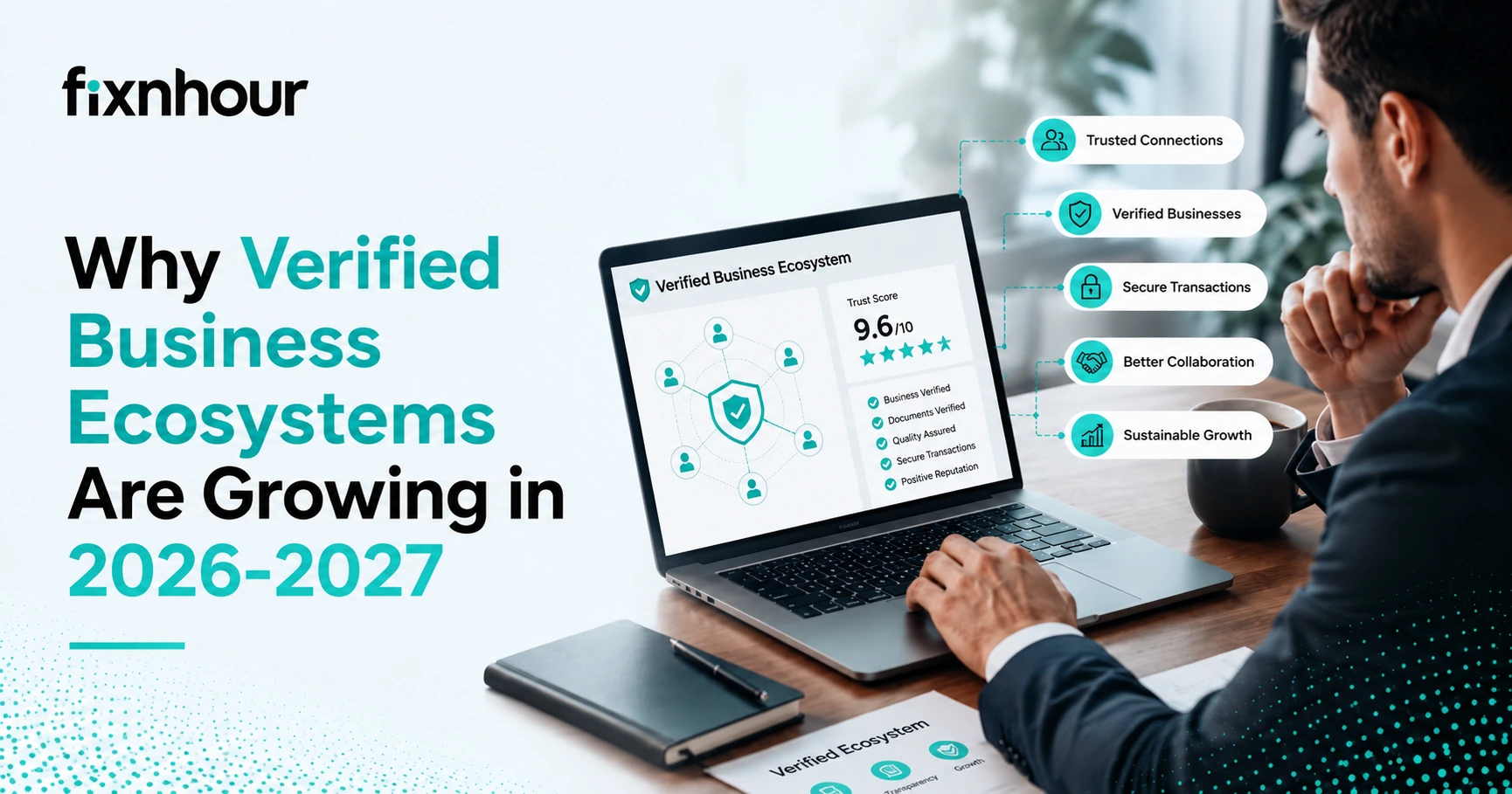
Verified business ecosystems are digital platforms, marketplaces, directories, and networks where businesses undergo validation processes to prove their legitimacy, credibility, and trustworthiness. These ecosystems help buyers identify reliable service providers while helping businesses gain visibility, trust, and qualified leads. As AI-driven search and digital trust become more important, verified ecosystems are becoming a critical component of business growth strategies in 2026-27.
Key Takeaways
- Trust is becoming a stronger competitive advantage than visibility alone.
- Verified businesses attract higher-quality leads and better conversion rates.
- Buyers increasingly prefer verified vendors over unverified providers.
- AI-powered search engines prioritize trustworthy and accurate business data.
- Verified ecosystems help reduce fraud and improve marketplace transparency.
- Online reviews and certifications significantly influence purchasing decisions.
- Strong digital credibility improves long-term business growth.
- Verified business networks create more efficient connections between buyers and sellers.
Understanding the Evolution of Business Ecosystems
The concept of business ecosystems has existed for decades. Traditionally, businesses relied on trade shows, referrals, printed directories, and networking events to establish credibility and attract customers.
The internet transformed this process by enabling businesses to create websites and list themselves on online directories. However, while online visibility improved, it also created new challenges. Thousands of businesses could claim expertise without providing evidence of quality, experience, or customer satisfaction.
As digital competition increased, buyers found it increasingly difficult to distinguish trustworthy companies from unreliable ones.
This challenge gave rise to verified business ecosystems.
Unlike traditional directories, verified ecosystems focus on quality rather than quantity. Businesses must often provide documentation, certifications, customer reviews, and company information to demonstrate legitimacy.
These ecosystems create a safer and more transparent environment where businesses and buyers can interact with greater confidence.
Key Components of Modern Verified Ecosystems
Modern verified business ecosystems typically include:
- Business identity verification
- Website validation
- Customer reviews and ratings
- Industry certifications
- Case studies and portfolios
- Trust badges and verification marks
- Performance metrics
- AI-readable business profiles
- Reputation monitoring systems
Statistics & Market Insights: The Growth of Verified Business Networks
The rise of verified business ecosystems is closely linked to changing buyer behavior and advancements in digital technology.
Several market trends are driving this growth:
- More than 90% of buyers research companies online before making contact.
- Customer reviews remain one of the most influential trust factors in purchasing decisions.
- AI-powered search engines increasingly prioritize trusted and verified information sources.
- Businesses with complete and verified profiles often generate higher engagement and conversion rates than unverified competitors.
- Online fraud and misinformation continue to increase demand for verified marketplaces.
Why Verified Business Ecosystems Are Growing Rapidly
Verified business ecosystems are growing rapidly because buyers increasingly demand transparency, trust, and reliable information before making purchasing decisions. Rising online competition and fraud risks have made verification essential. These platforms help businesses build credibility while enabling buyers to find trustworthy providers quickly, creating a more secure, efficient, and confidence-driven marketplace.
Increased Buyer Skepticism
Modern buyers are more informed than ever before. They research vendors extensively before making purchasing decisions.
They compare reviews, analyze company profiles, examine case studies, and verify credentials before engaging with providers.
Growth of Online Fraud
The digital marketplace has made it easier for fraudulent companies to appear legitimate. Fake reviews, misleading claims, and inaccurate business information have created trust issues across industries.
Verification systems help address these concerns by validating business information and reducing risk.
AI Search Prioritizes Trust
Search engines and AI-powered platforms increasingly reward trustworthy information.
Businesses with verified profiles, accurate data, and strong reputations are more likely to appear in search results, AI-generated answers, and business recommendations.
Demand for Transparency
Customers expect transparency regarding pricing, services, credentials, and customer experiences.
Verified ecosystems provide the information buyers need to make informed decisions quickly and confidently.
Also Read: How Buyers Evaluate B2B Companies Before Contacting Them in 2026
Benefits of Verified Business Ecosystems for Businesses
Verified business ecosystems help businesses build credibility, increase online visibility, and attract high-quality leads. Verification enhances customer trust, improves brand reputation, and differentiates businesses from competitors. These platforms also provide greater exposure, stronger conversion opportunities, valuable customer feedback, and long-term growth through trusted digital relationships and marketplace recognition.
Higher Trust and Credibility
Trust is one of the most valuable business assets. When a company becomes part of a verified ecosystem, it immediately gains additional credibility because customers know the platform has validated important business information.
Verified profiles help businesses demonstrate legitimacy, professionalism, and reliability.
Better Lead Quality
One of the biggest challenges businesses face is attracting qualified leads. Verified ecosystems help solve this problem by connecting businesses with buyers who are actively searching for trusted service providers.
As a result, businesses often experience:
- Higher inquiry quality
- Better conversion rates
- Shorter sales cycles
- Reduced marketing waste
Improved Online Visibility
Search engines favor trustworthy sources of information. Verified business profiles often perform better in search results because they contain structured data, complete business information, and customer-generated trust signals.
This increased visibility can lead to:
- More website traffic
- Better local search rankings
- Increased brand awareness
- Greater authority within the industry
Stronger Brand Reputation
A verified presence allows businesses to showcase reviews, certifications, achievements, and successful projects.
Over time, these trust indicators strengthen brand reputation and help companies stand out from competitors.
Also Read: 7 Signs a B2B Service Provider Is Trustworthy Before You Hire Them
Benefits of Verified Business Ecosystems for Buyers
Verified business ecosystems help buyers make informed decisions by providing access to trusted, pre-verified businesses. They reduce the risk of fraud, improve transparency, simplify vendor comparisons, and save time during the selection process. Buyers gain confidence through reviews, ratings, certifications, and verified credentials, leading to better purchasing outcomes.
Faster Vendor Evaluation
Instead of spending hours researching multiple providers, buyers can access verified information in one place.
This helps decision-makers compare businesses more efficiently and confidently.
Reduced Risk
Verification reduces uncertainty and minimizes the likelihood of engaging with fraudulent or unqualified providers.
Buyers gain access to:
- Verified company information
- Customer reviews
- Business credentials
- Service histories
- Performance indicators
Better Decision-Making
Access to transparent information allows buyers to make more informed purchasing decisions.
This creates better outcomes for both buyers and sellers.
How Verified Business Ecosystems Work: Step-by-Step Process
Verified business ecosystems operate through a structured process that includes business registration, verification, profile optimization, trust signal integration, buyer discovery, vendor evaluation, lead generation, and ongoing reputation management. This system helps businesses establish credibility, attract qualified customers, build trust, improve visibility, and create long-term growth opportunities in digital
| Step | Process | Purpose |
|---|---|---|
| 1 | Business Registration | Create a complete company profile and establish an online presence within the verified business ecosystem. |
| 2 | Verification Review | Validate business credentials, contact details, and operational information to ensure authenticity. |
| 3 | Documentation Submission | Submit licenses, certifications, registrations, and supporting documents to confirm legitimacy. |
| 4 | Profile Optimization | Enhance company descriptions, services, keywords, images, and contact information to improve visibility. |
| 5 | Review Collection | Gather customer reviews, ratings, testimonials, and feedback to build trust and credibility. |
| 6 | Ongoing Monitoring | Continuously monitor performance, compliance, reviews, and profile accuracy to maintain quality standards. |
Verification Checklist
Most platforms require some combination of:
- Company registration documents
- Business website verification
- Official email validation
- Business contact verification
- Industry certifications
- Client testimonials
- Portfolio evidence
- Social media presence
Also Read: 50+ Best B2B Service Marketplaces for Businesses in 2026
Cost of Building and Maintaining a Verified Business Presence
Building and maintaining a verified business presence involves costs related to profile creation, verification programs, premium listings, reputation management, content updates, and marketing efforts. Expenses can range from free basic verification to premium subscriptions costing thousands annually. Investing in verification enhances credibility, increases visibility, generates quality leads, and provides long-term returns through improved customer trust and business growth.
Typical Verification Costs in 2026
| Verification Type | Estimated Annual Cost | Key Features |
|---|---|---|
| Basic Verification | Free – $99/year | Business identity verification, basic profile listing, and essential trust badge. |
| Professional Verification | $100 – $500/year | Enhanced profile visibility, document validation, customer review management, and credibility indicators. |
| Premium Verification | $500 – $2,000/year | Advanced verification, priority placement, reputation monitoring, lead generation tools, and detailed analytics. |
| Enterprise Programs | $2,000+/year | Comprehensive verification, dedicated account management, custom branding, premium exposure, and enterprise-level support. |
Is Verification Worth the Investment?
For most businesses, the answer is yes.
The return on investment often comes from:
- Increased trust
- More qualified leads
- Better visibility
- Improved conversion rates
- Stronger brand positioning
Common Challenges Businesses Face in Verified Ecosystems
Businesses in verified ecosystems often face challenges such as meeting verification requirements, maintaining accurate profile information, managing online reviews, standing out among competitors, and keeping certifications up to date. Some companies also struggle with reputation management and compliance standards. However, overcoming these challenges helps build trust, improve visibility, attract qualified leads, and strengthen long-term customer relationships.
Maintaining Accurate Information
Business information changes frequently.
Companies must regularly update:
- Contact information
- Services offered
- Certifications
- Team details
- Portfolio projects
Reputation Management
Customer reviews are powerful trust signals. Businesses must actively monitor feedback and respond professionally to customer concerns.
Meeting Verification Requirements
Some businesses may struggle to provide the documentation required by certain platforms. However, the long-term benefits generally outweigh the initial effort.
Best Practices for Succeeding in Verified Business Ecosystems
Success in verified business ecosystems requires maintaining accurate business information, collecting authentic customer reviews, showcasing certifications, responding promptly to inquiries, and regularly updating company profiles. Businesses should focus on transparency, service quality, and trust-building. Consistent engagement, strong reputation management, and verified credentials help improve visibility, credibility, lead generation, and long-term business growth.
Keep Information Updated
Ensure all business details remain accurate and consistent across platforms.
Collect Authentic Reviews
Encourage satisfied customers to leave honest feedback.
Authentic reviews significantly influence purchasing decisions.
Showcase Proof of Expertise
Display:
- Certifications
- Awards
- Case studies
- Success stories
- Client testimonials
Why Choose Fixnhour
As verified business ecosystems continue to evolve, businesses need platforms that prioritize transparency, trust, and quality. Fixnhour is designed to help businesses connect with qualified buyers while building long-term credibility.
Why Businesses Choose Fixnhour
- Verified company listings that improve trust and credibility
- Greater visibility among business decision-makers
- Transparent review and rating systems
- Easy comparison of service providers
- Improved lead generation opportunities
- Strong focus on quality, reliability, and business growth
Conclusion.
Visibility alone is no longer enough. Buyers increasingly demand transparency, credibility, and proof of expertise before making decisions. At the same time, AI-powered search engines and recommendation systems are prioritizing trusted information sources more than ever before. Businesses that invest in verification, reputation management, customer experience, and transparency will be better positioned to attract customers and achieve sustainable growth. As digital trust becomes one of the most valuable business assets, verified ecosystems will play a central role in shaping the future of online commerce.
Platforms like Fixnhour are helping businesses embrace this future by creating trusted environments where buyers and service providers can connect with confidence, transparency, and long-term success. If you're looking to enhance your business credibility, increase visibility, and connect with verified buyers, contact us today to discover how Fixnhour can help your business grow in the evolving digital marketplace.
Frequently Asked Questions
Q1. What is a verified business ecosystem?
Ans. A verified business ecosystem is a trusted online marketplace, directory, or business platform where companies undergo a verification process to confirm their legitimacy, business credentials, operational status, and reputation. These ecosystems help buyers connect with reliable vendors while reducing the risk of fraud, misinformation, and low-quality service providers. Verification often includes identity checks, business registration validation, customer reviews, certifications, and performance assessments.
Q2. Why are verified business platforms important in 2026?
Ans. Verified business platforms have become increasingly important in 2026 because businesses and consumers conduct more transactions online than ever before. With rising concerns about fake profiles, scams, and misleading information, buyers need reliable ways to identify trustworthy providers. Verified platforms create transparency, improve confidence in purchasing decisions, reduce risks, and help businesses establish credibility in highly competitive digital marketplaces.
Q3. How do verified business listings improve lead generation?
Ans. Verified business listings improve lead generation by increasing buyer confidence and encouraging engagement. When potential customers see verification badges, positive reviews, certifications, and complete company profiles, they are more likely to trust the business and make contact. These listings also rank better within marketplaces and search results, attracting highly targeted prospects who are actively looking for credible products or services.
Q4. Can verification improve SEO performance?
Ans. Yes, business verification can contribute to stronger SEO performance by enhancing trust signals that search engines value. Verified profiles often contain accurate business information, customer reviews, structured data, and updated content. These elements improve user experience, increase click-through rates, and boost credibility. Over time, stronger trust signals can help businesses gain better visibility in search results and AI-generated recommendations.
Q5. What trust signals do buyers look for?
Before choosing a vendor, buyers typically evaluate multiple trust signals to reduce risk and ensure quality. These include customer reviews, ratings, case studies, certifications, industry awards, years of experience, client testimonials, and verification badges. Buyers also examine website quality, response times, portfolio examples, and social proof. Strong trust signals help businesses establish credibility and influence purchasing decisions more effectively.
Q6. How much does business verification cost?
Ans. The cost of business verification varies significantly depending on the platform, industry, and verification level. Many platforms offer basic verification at no cost, while advanced programs may charge annual fees ranging from a few hundred to several thousand dollars. Premium verification often includes additional benefits such as enhanced visibility, trust badges, priority listings, lead generation tools, and detailed business assessments.
Q7. Are verified ecosystems suitable for small businesses?
Ans. Yes, verified business ecosystems are especially beneficial for small and growing businesses. Verification helps smaller companies build credibility, demonstrate professionalism, and compete with larger, well-established brands. By displaying trust indicators such as verification badges, customer reviews, and business credentials, small businesses can attract more qualified leads, improve conversion rates, and establish stronger relationships with potential customers in competitive markets.
Q8. What is the future of verified business ecosystems?
Ans. The future of verified business ecosystems will be driven by advanced technologies that improve trust, transparency, and decision-making. Artificial intelligence will automate verification processes and reputation monitoring, while blockchain technology may provide secure and tamper-proof credential validation. AI-powered recommendation engines will help buyers identify the most trustworthy providers based on real-time performance, reviews, expertise, and verified business credentials.